By Graycen Bigger, Executive Director, Northeast Arkansas Regional Intermodal Authority
Economic development is about more than bringing jobs to a community. It is about creating places where people want to live, work, raise their families, and build their futures.
In Northeast Arkansas, we have made significant progress in creating jobs and attracting private investment. Since 2020, the Northeast Arkansas Regional Intermodal Authority has helped secure more than $76 million in private investment and supported the creation of more than 1,100 jobs in our region.
Those numbers represent real opportunities for our neighbors. They represent families with greater financial stability, businesses investing in our communities, and young people who have more reasons to build their futures here at home.
But our work is far from finished.
When NEA Intermodal adopted its second strategic plan in 2025, we asked the people we serve what they wanted to see in their communities. Their answers were telling.
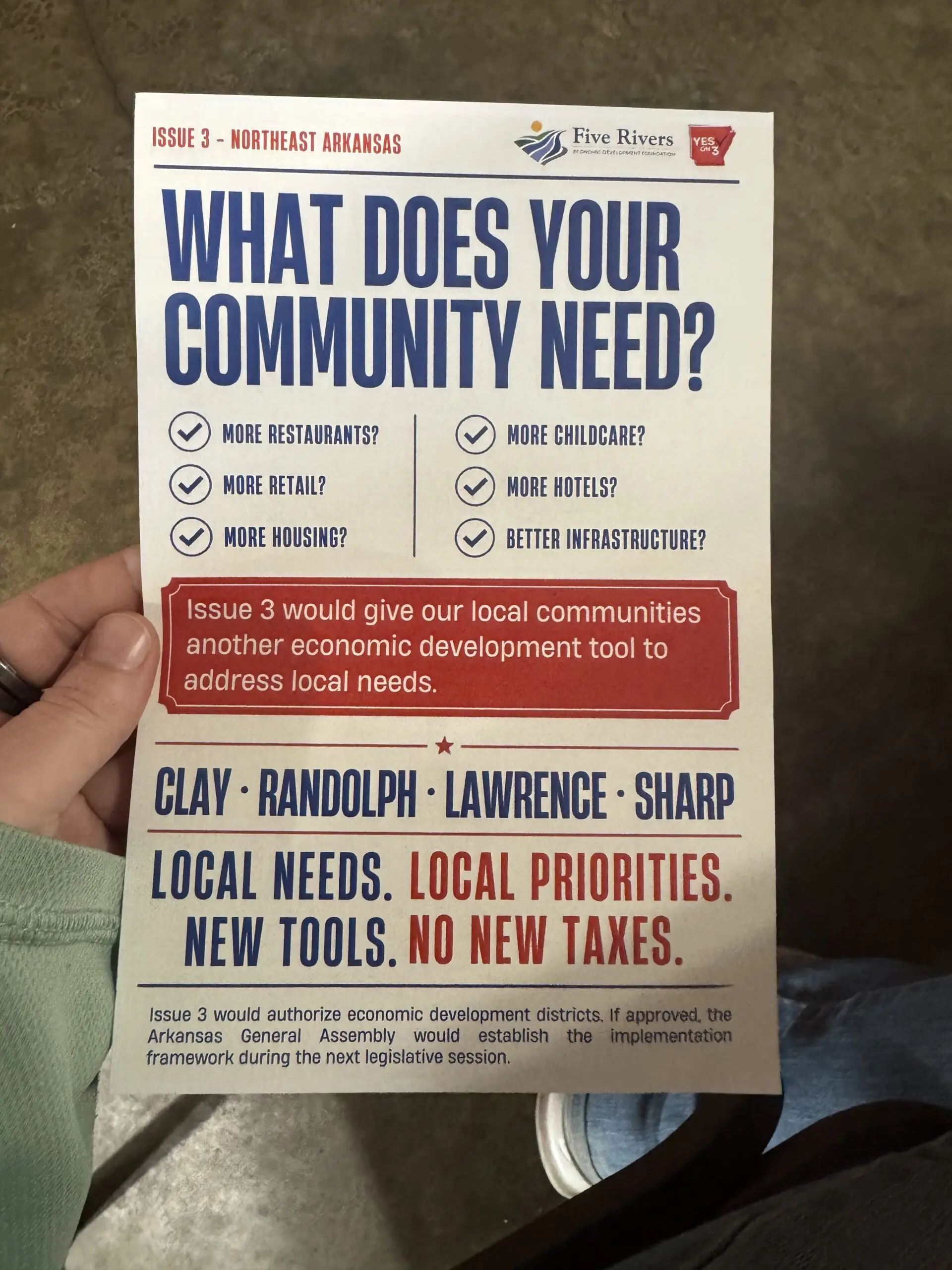
They weren’t asking us to focus on bringing more jobs. They, overwhelmingly, wanted more restaurants, more retail, more housing, and more amenities for their families. They wanted the conveniences and experiences that make a community a place people are proud to call home.
In other words, they were asking us to build on the economic progress we’ve already made.
And they were right.
Today, our four-county region loses an estimated $223 million annually in retail spending to other communities. That’s $223 million in potential local economic activity leaving our region every year because residents travel elsewhere to shop, dine, and find the things they need. And a lot of the time, they go across the state line.
Think about what that means for our rural area. It means driving to another community for shopping, a family dinner, or entertainment that isn’t available close to home. It means spending money somewhere else that could be supporting local businesses, creating jobs, building activities for youth, and strengthening our communities.
And it means we’re missing opportunities to grow.
As economic developers, we work every day to recruit businesses, support existing employers, improve infrastructure, and prepare our workforce for the future. But when it comes to attracting retail, housing, restaurants, and other quality-of-life investments, Arkansas communities are often at a disadvantage because they are competing without the same economic development tools.
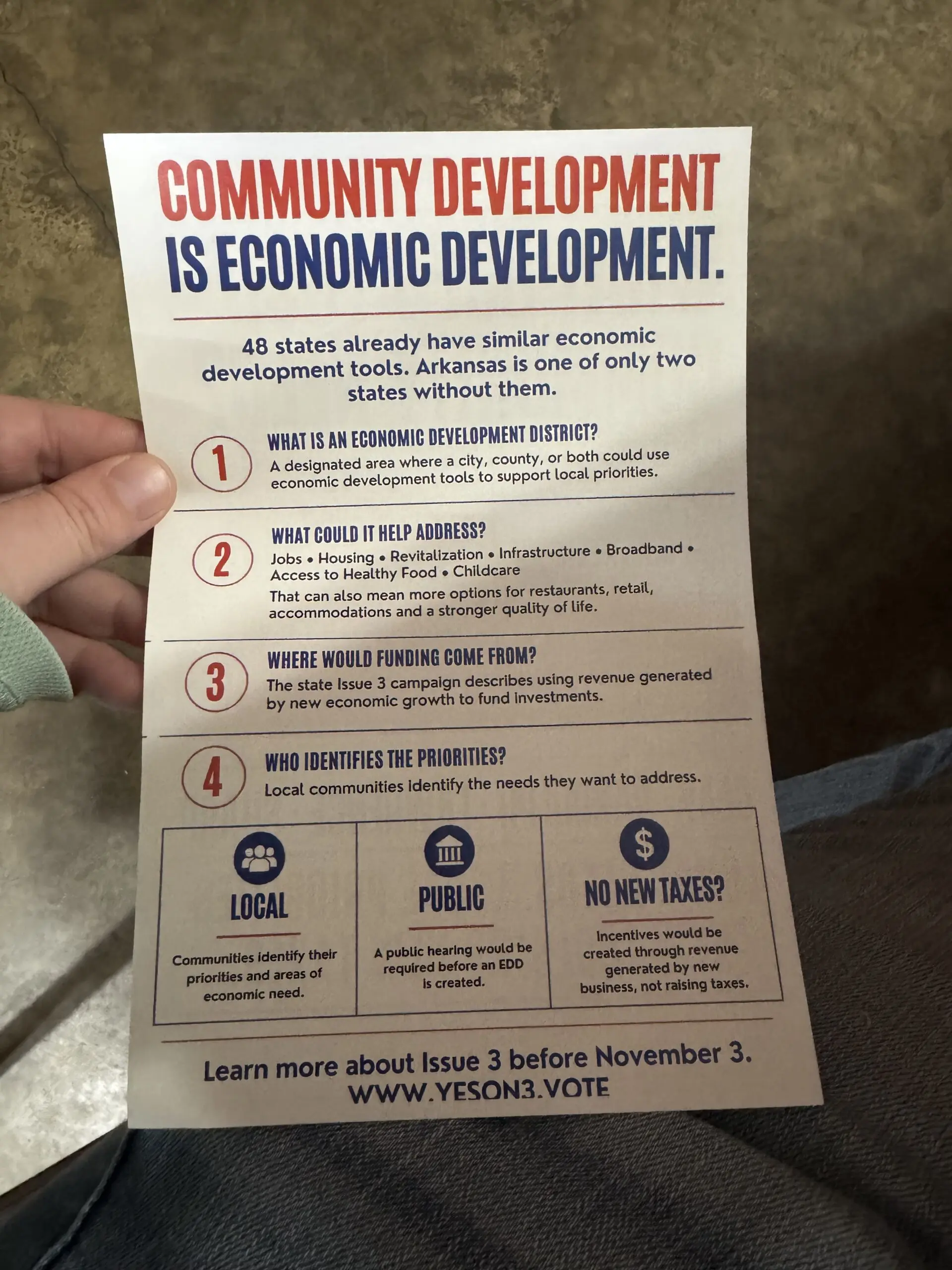
Forty-eight states have comparable economic development tools, including every state that borders Arkansas. That means when we’re competing for a new restaurant, retail development, housing project, or other private investment, our neighboring communities have options that we simply don’t.
That is why Issue 3 matters.
Issue 3 would give Arkansas cities and counties the option to establish local economic development districts and use additional financing tools to encourage development. It would give communities more flexibility to pursue projects based on their own priorities, rather than trying to fit every opportunity into the same limited set of state incentives. And it offers this without raising taxes.
And here’s what I believe is important for residents to understand: these districts are intended to be driven by YOUR local needs, with projects evaluated against community goals and public benefits.
Issue 3 would require a developer to make the upfront investment and meet agreed-upon performance goals before receiving reimbursements from new revenue generated directly by the project. Rather than simply handing a developer a check, the community could negotiate an incentive tied to the investment and results delivered.
The specific financing arrangements, accountability requirements, and safeguards would be established through implementing legislation and local agreements. Transparency and public accountability are central to that process.
And because no two communities have the same needs, the tools should be flexible. What makes sense for a housing development in one community may look entirely different from a retail project, infrastructure improvement, or downtown revitalization effort in another.
This isn’t about replacing the small businesses that have served our communities for generations. They are part of what makes our towns special, and supporting their continued growth must remain a priority. It’s about creating more opportunities for local businesses to expand and attracting investments that complement what we already have.
It is also about local decision-making. Our communities have different needs, and our local leaders should have the ability to evaluate projects based on what makes sense for the people they serve.
Issue 3 won’t solve every challenge facing rural Arkansas. It won’t guarantee that a developer chooses our community or that every project succeeds. We will still need strong leadership, responsible planning, infrastructure investment, and partnerships.
But it could give us another way to turn opportunities into results.
I have spent my career working alongside local leaders, employers, educators, and residents who care deeply about the future of Northeast Arkansas. I have seen what happens when communities work together, plan for growth, and refuse to accept that opportunity belongs somewhere else.
Our region has demonstrated that we can compete for major industrial projects, create jobs, and attract investment. Now it’s time to apply that same determination to the other things our residents have told us they want.
Because community development is economic development.
A new restaurant or retail store might not generate the headlines of a major manufacturing announcement. But to the family that no longer has to drive 30 minutes for dinner, the young professional deciding whether to move home, or the small business owner who benefits from more people shopping locally, it matters.
Every investment matters. Every business matters. Every family matters.
You asked us for more retail. You asked us for more restaurants, housing, and amenities. You asked us to build communities where your children and grandchildren will want to stay.
We’ve heard you. And we’re working to deliver.
Issue 3 offers an opportunity to put another tool in our toolbox to help make those priorities a reality.
This November, I’m asking my neighbors across Arkansas to vote yes on Issue 3. Not simply because 48 other states have comparable tools, but because our communities deserve the same opportunity to compete and pursue the future they’ve told us they want.
We’ve proven we can bring jobs home.
Now let’s build the communities we want for the future.


Submitted
This material was submitted by a member of the community, and Hallmark Times would like to thank them for sharing with us!