
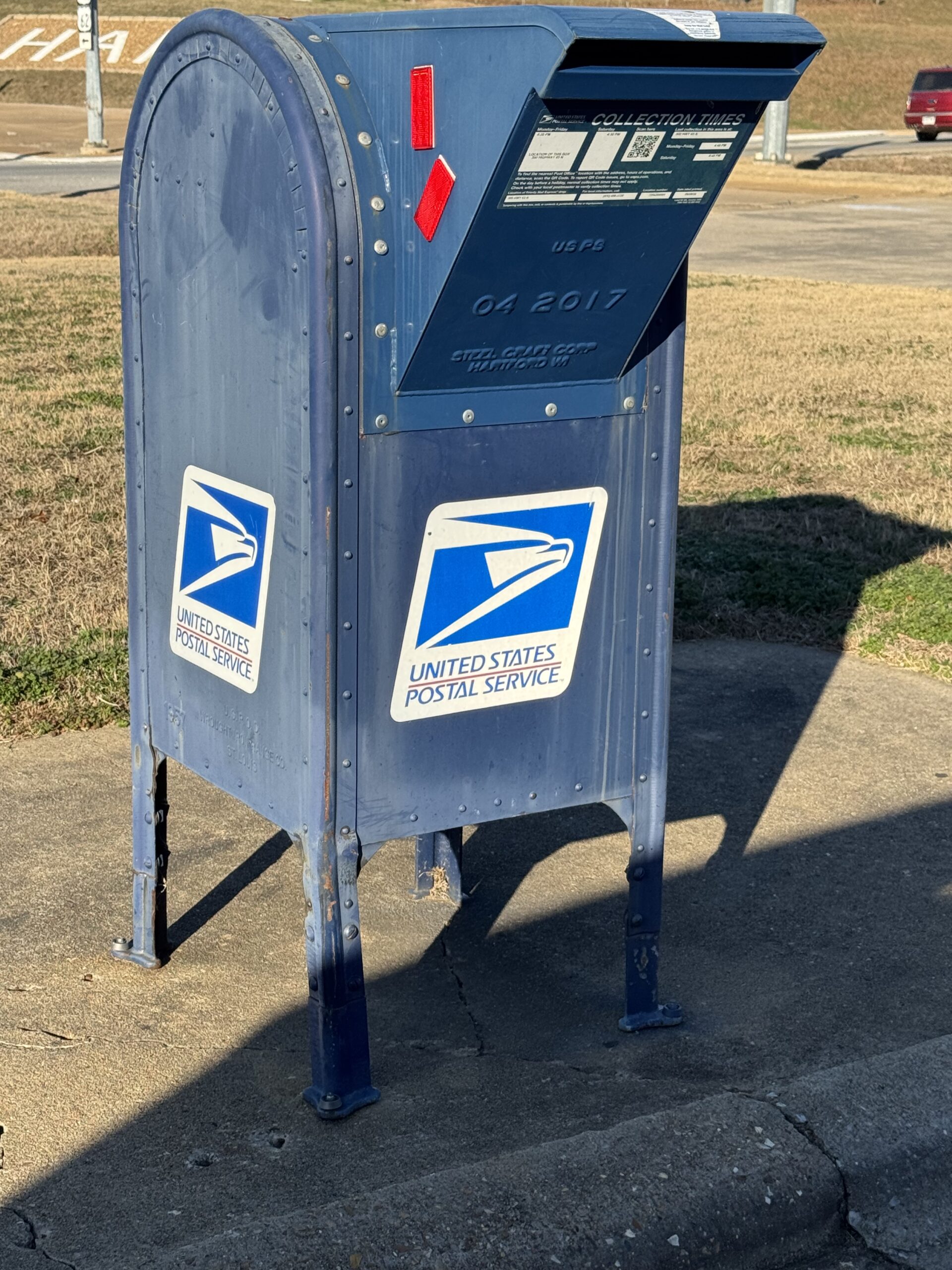
If you are among the more than 100 million Americans who use the U.S. Postal Service, you may need to adjust your routine.
As of Dec. 24, new regulations have changed the postmark date and when it is applied once mail has transitioned from a patron’s hand to the postal service if certain steps are not taken.
For those mailing legal documents, bills and other time sensitive documents, this change could mean late fees, denials of appeal and other issues if the mail is simply dropped in the boxes.
The postal service has adopted (FR Doc. 2025-20740) adding Section 608.11, “Postmarks and Postal Possession,” to the Domestic Mail Manual (DMM).
Essentially, the new rule clarifies that the date displayed on a machine-applied postmark is now counted on the day the mail makes it to and is processed at, a processing facility, rather than the date the mail was dropped at your post office.
This change in processing means the postmarked date on the envelope and the date the mail was provided to the post office, will likely no longer match.
To ensure a postmark on the date of delivery, individuals must use specific services.
Those options include: physically entering the post office and requesting a Manual Postmark; using a Postage Validation Imprint or buying Certificates of Mailing through registered or certified mail.
Here is a more detailed explanation published by Currentfederaltaxdevelopments.com, a website dedicated to articles on current federal regulation changes that affect those who work in tax practices.
“• Request a Manual Postmark: Customers may present a mailpiece at a retail counter and request a “manual (local) postmark”. This postmark is applied at the time of acceptance, so the date aligns with the date the USPS took possession.
· Postage Validation Imprint (PVI): When a customer pays for postage at a retail counter, the PVI label applied by the employee also indicates the date of acceptance.
· Certificates of Mailing: Customers may purchase a Certificate of Mailing, or use Registered or Certified Mail; to obtain a receipt that serves as evidence of the date the item was presented for mailing.”
The rule also cautions that pre-printed or customer applied labels will not reflect post mark, only the date the label was printed.
It is recommended for: ballots, bills, legal documents, and other time sensitive material, to use the above-mentioned options to prevent late fees, penalties, declines and other complications.


Lauren is a an award-winning journalist who decided after 10 years of newspaper experience to venture out. Hallmark Times was born.